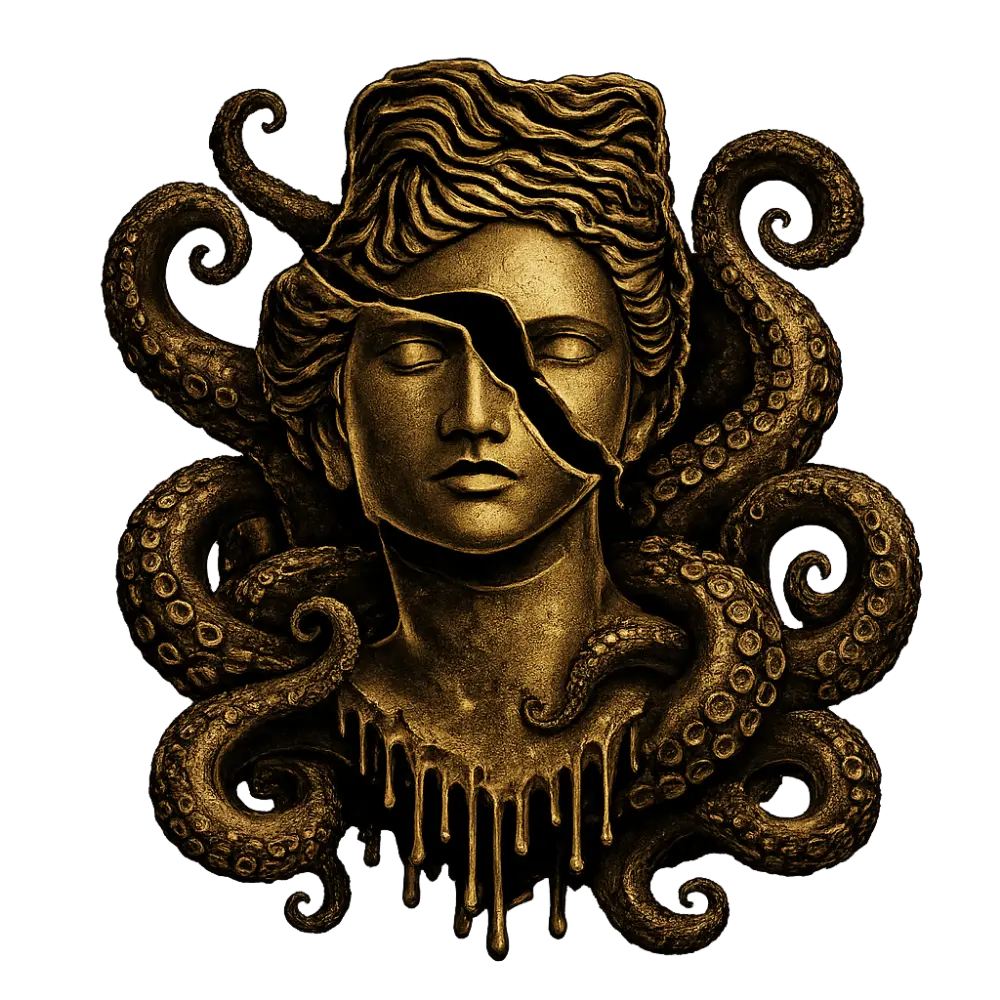
Most people know her as the sea monster near Charybdis. The one Odysseus has to pass in The Odyssey. The one with six heads who takes six men from his ship. That version matters most to me because Homer gives us the earliest major literary version we have, and in that version, Scylla is already a monster.
The problem is that later writers did not leave her there; they of course used Homer’s writing as inspiration. But I suppose they had questions they sought answers to. So they created them in their own depictions.
Over time, Scylla’s story changed. Later versions give her an origin, a transformation, and links to Glaucus and Circe. They link her to human emotions like jealousy and the feeling of rejection. Ovid’s Metamorphoses is one of the big places where that later version develops, with Scylla being changed after Glaucus seeks help from Circe.
So when people talk about Scylla, they are often talking about several versions at once and quite often, even without realising it.
That is what I want to go over in this post. Homer’s version of Scylla in Greek mythology comes first, because his version is the earliest major literary version we have. Then we can look at how later writers twisted her into something else, from sea monster to cursed woman, to a figure shaped by revenge and rejection.
Table of Contents
Who Is Scylla in Greek Mythology
I went to watch Christopher Nolan’s film adaptation of Homer’s Odyssey. I knew bits of the poem before, but the movie really made me want to dive into it further. Scylla was one of the creatures that stuck out to me. I wanted to find out more about her because I like to explore anything that is linked to mythology.
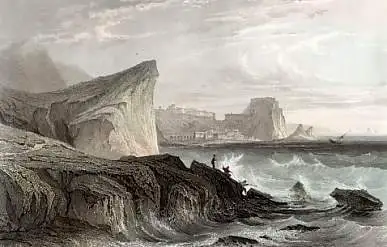
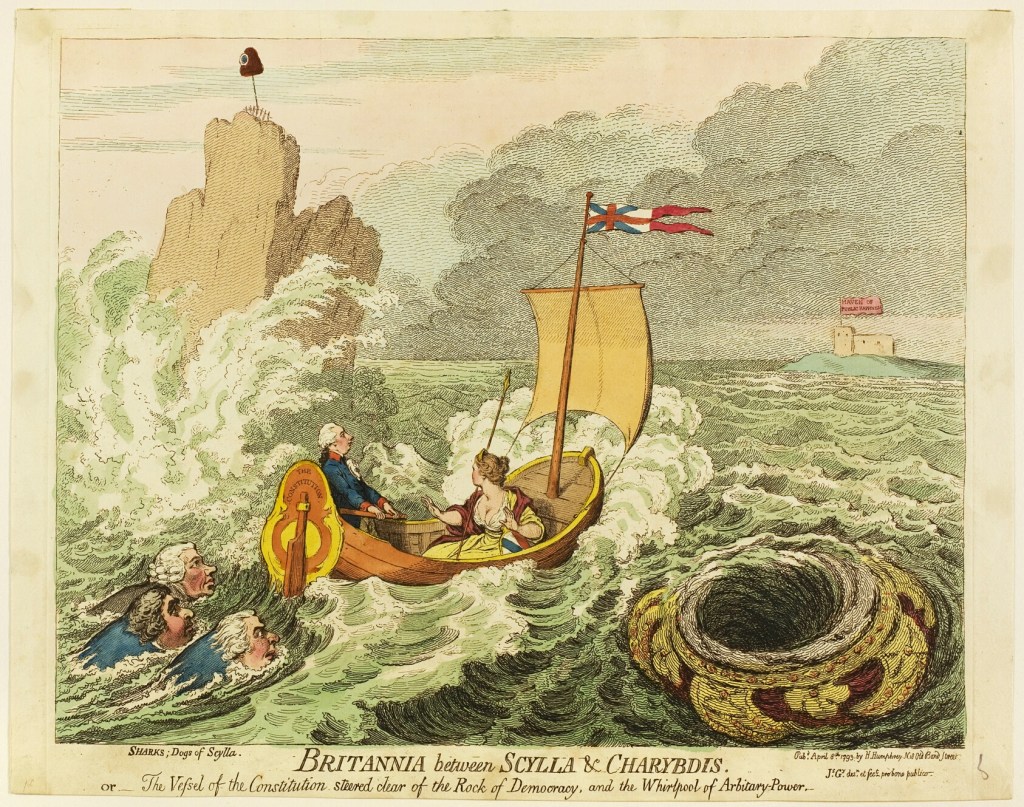
Scylla lives on one side of a narrow sea passage, opposite Charybdis, and becomes one of the most brutal dangers Odysseus faces on his journey home.
In Homer’s version, Scylla is not introduced as a beautiful woman, a cursed nymph, or someone we watch transform. She is already a monster when we meet her. The reason I state that is because a lot of modern retellings start with some form of tragedy that took place that turned her into a monster, while Homer starts with the threat itself.
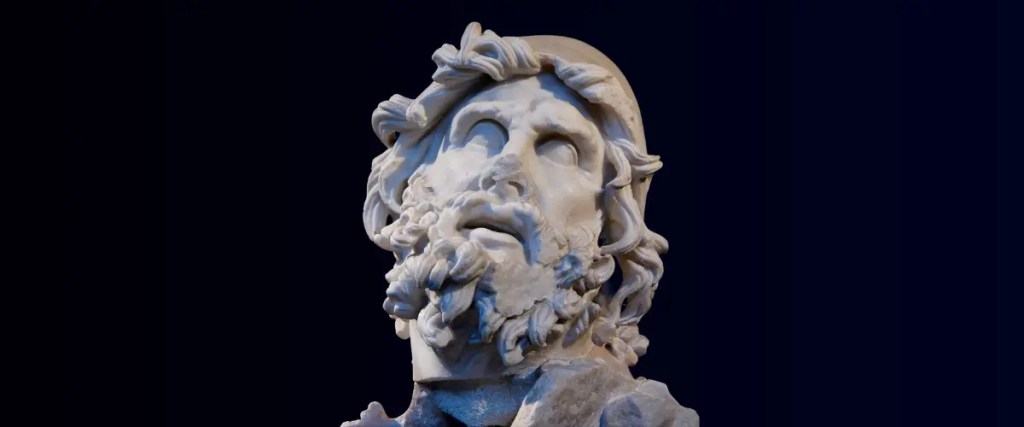
She is dangerous, she cannot be reasoned with, bargained with, and it would be foolish of Odysseus to try and fight her. It would cost him a lot more to do so. Circe warns Odysseus about her before he reaches the passage. Well, it was more laid before him as a tactical choice. Odysseus already lost a lot of men trying to get back home after the battle of Troy. The choice was, either for everyone to die to Charybdis, or to lose six men when Scylla strikes from her cave.
That is the version I want to keep at the front of this post. Scylla begins, at least in the earliest major version we have, as a horrific creature that resides in the cliffs at sea and sailors have to somehow survive. Later, other writers built on Scylla’s story, as some of them seem to have wanted answers Homer did not give.
What Scylla Looked Like in Greek Mythology
Homer’s Scylla is not the smooth, tragic sea-woman you might picture from later art or modern retellings. In The Odyssey, she is far more horrific-looking.
Circe describes Scylla as having twelve misshapen feet, six long necks, and a terrifying head on each neck. Each head has three rows of teeth, packed close together. That image alone tells you why Odysseus cannot treat her like any other enemy he has encountered so far.
Homer also places her in a cave high up in the rock. That makes her even worse because the sailors are not facing something in open water where they can see everything clearly. She is hidden in the cliff, reaching out from above as the ship passes below.
Furthermore, her voice is another strange detail. Homer does not give her some grand roar. He compares her sound to the yelp of a young dog. Which, in itself, feels wrong when you match it with the rest of her body. Six heads, three rows of teeth, long necks, and then a voice that sounds smaller, more fragile than the horror she brings. When you think about it, you hear a dog yelp; you’d want to find that dog. Investigate to find out what is wrong and try to help it, and ease any discomfort and pain it may be going through. She’s quite deceptive really.
When it comes to later story developments by other writers of Scylla… this is where those images can get confusing. A lot of later versions lean into the idea of Scylla as part woman, part monster, sometimes with dog-like features around her lower body. But Homer’s Scylla is not introduced to us that way. His version gives us a cliff-dwelling sea monster with too many heads, too many mouths, and no “soft” origin story attached to her.
So if you are asking what Scylla looked like in Greek mythology, the first answer should be Homer’s: six heads, six long necks, twelve misshapen feet, and mouths with three rows of teeth.
How Scylla’s Depictions Changed in Art Over Time
When you move from written myth into how those stories influenced art over time, Scylla starts to look different.
Artists over the centuries did end up making her easier to recognise as a figure. She became more human in the upper body, while the monstrous parts gather around her lower half. The British Museum has a terracotta askos (ancient Greek pottery vessel) showing Scylla with a fish tail and dogs coming from her hips. That is a long way from the sea monster that resides on a cliff that was given to us by Homer in The Odyssey.
The Met has similar examples. One Greek vessel depicts Scylla with the upper body of an alluring woman, with scaly limbs emerging from her hips. Another Met piece shows her dog heads snapping at fish while she holds the broken rudder of a ship. That broken rudder is a good touch because it keeps her tied to shipwreck, sailors, and the danger of passing through her territory.
So over time, Scylla becomes easier to picture but harder to define. Is she a sea monster? A woman? A part-dog creature? A fish-tailed being? But, thinking about it… wouldn’t that perhaps make her part mermaid? In the art created over the centuries, she is at times depicted as all of those creatures at once.
Over the years, art helped create the Scylla many people imagine now. The Oxford Classical Dictionary notes that in art and later literature, the dog heads move to her waist, freeing her upper body to become an alluring woman while her lower body becomes fish-like.
So, if Homer gives us the first major literary Scylla. Art gives her a more visual body. It turns her into a hybrid figure, part woman, part sea creature, part dog-headed nightmare. That image sticks in our minds a lot more easily, as we are familiar with women, with dogs, with fish. So it makes the “nightmare” that Scylla is easier to paint, carve, sculpt, and remember.
Why Scylla Was Cursed Into a Monster
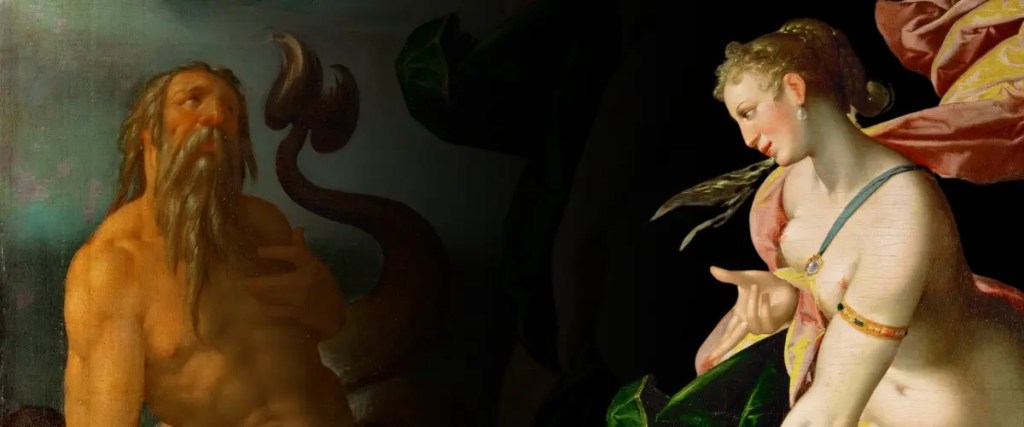
The later transformation of Scylla in Greek mythology begins with Glaucus.
By this point in Ovid’s Metamorphoses, Glaucus is not a normal man either. He has already been changed into a sea god, by his own doing, mind you! He was mortal once, a fisherman, then decided to eat something that he probably shouldn’t have, and it turned him into a merman/sea god.
Anyway, when he sees Scylla, he wants her. Scylla does not return that feeling. In fact, she fears him and flees from him. Glaucus does not accept her answer and leave her alone. He decides that it’s a good idea to go to Circe for help. In the hopes she can use her knowledge of herbs and magic to make Scylla love him. So, right from the start, Scylla’s choice is being pushed aside.
Circe then tries to win Glaucus for herself. He refuses her and stays fixed on Scylla. In Ovid’s version, he says his love will not change while Scylla lives. That line lands badly for Scylla, because Circe does not turn her anger towards Glaucus. She turns it towards the woman he wants.
Circe poisons the water where Scylla bathes. She uses magic herbs and words, then leaves the trap waiting for her. When Scylla enters the water, her body changes. She looks down and sees barking monsters around her lower body. The version people often know from later art starts to make more sense here: woman above, horror below.
So, even though Scylla rejects Glaucus, she is punished for being desired. Glaucus wants her. Circe wants him. Scylla becomes the place where their desire, jealousy, and anger end up.
Ovid also tries to connect this later transformation story back to Odysseus. In his version, Scylla keeps her hatred for Circe and later takes men from Odysseus’ ship when she gets the chance. I would be careful not to read that back into Homer, though. In The Odyssey, Scylla is already the monster on the cliff, and Homer does not frame the attack as revenge against Circe. That does not make what happens to her fair. But it does show how the later myth ties her transformation to the monster sailors fear.
This version gives Scylla a past Homer does not give her.
Scylla’s Messy Family Tree and Later Death
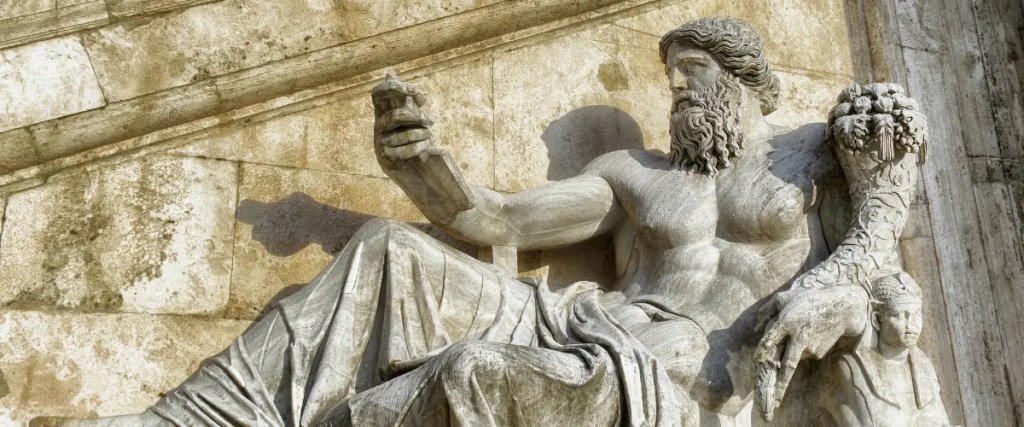
One of the harder parts of Scylla in Greek mythology is that her family line is not clear. Depending on the source, Scylla is linked to different parents. Some stories make her the daughter of Phorcys and Hecate, while others connect her to figures like Crataeis, Triton, Lamia, or Typhon and Echidna. That already tells you something about how messy her myth became over time.
Poseidon also gets pulled into some versions, which is why people ask if Scylla is his child. But he is not the parent I would put front and centre when talking about Homer’s Scylla. The safest answer is that Scylla’s parentage changes depending on the version you are reading.
Her death is messy too. In some later traditions, Heracles kills Scylla, but her father Phorcys restores her to life. That is not part of the main Homeric moment with Odysseus. It is another later thread that adds to the confusion around her story.
So when someone asks or looks for who Scylla’s parents were, or who killed her, the answer has to come with a warning. Greek mythology does not always give you one neat family tree, I mean… Zeus was a very busy guy so a clean family tree is difficult. Due to how the story changed over time for Scylla, you get several depictions as answers.
Final Thoughts…
Personally, I do prefer Homer’s version; he gives us the earliest major literary version we have. She’s depicted simply as a monster, which really reminds me a bit of Michael Myers in a way. He kills for the sake of killing; there’s no reason behind it, unlike other killers like Jason Voorhees. Which can make it more terrifying. There’s no bargaining to be had.
The later tellings of Scylla can make you feel less cold towards her: empathy, sadness, unfairness. Because they make her more human. The more people tried to give Scylla an origin, the more complex she became. She did not stop being monstrous, but she did stop being only a monster.
❓ FAQs
What geographical location is associated with Scylla?
Scylla is often associated with the Strait of Messina, the narrow stretch of water between Sicily and mainland Italy.
The Calabrian town of Scilla also keeps that mythic link alive, with the Calabria tourism site describing Scylla and Charybdis as sea monsters guarding the Strait of Messina.
You can also look at Scilla Beach, which overlooks the Strait of Messina, and the town of Scilla, where there is a Statue of Scylla by Francesco Triglia.
Are there video games featuring Scylla as a character?
Yes, one of the most recent examples is Hades II by Supergiant Games. The game is rooted in Greek myth, and Scylla appears in the game as part of Scylla and the Sirens, reimagined with a glam rock style rather than as a straight copy of Homer’s monster.
That is the thing I find interesting with games. They do not have to choose the “correct” Scylla. They can pull from the monster, the performer, the sea horror, or the cursed woman, depending on the kind of character they want to create.
Who offers merchandise inspired by Scylla from Greek mythology?
You can find Scylla-inspired merch on sites like Etsy, mostly as art prints, posters, stickers, shirts, and digital statue files. I would treat these as fan-made or independent pieces unless the seller states otherwise.